Why Smart People Are Quitting The News - Maya Shankar & Evan Smith
00;00;00;00 - 00;00;09;14
Speaker 1
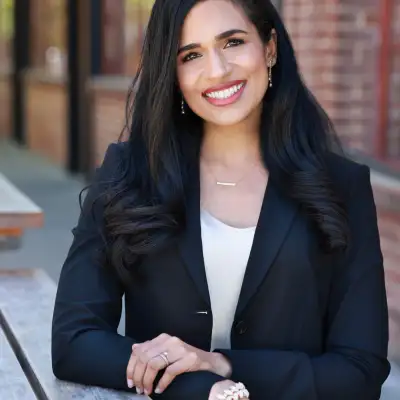
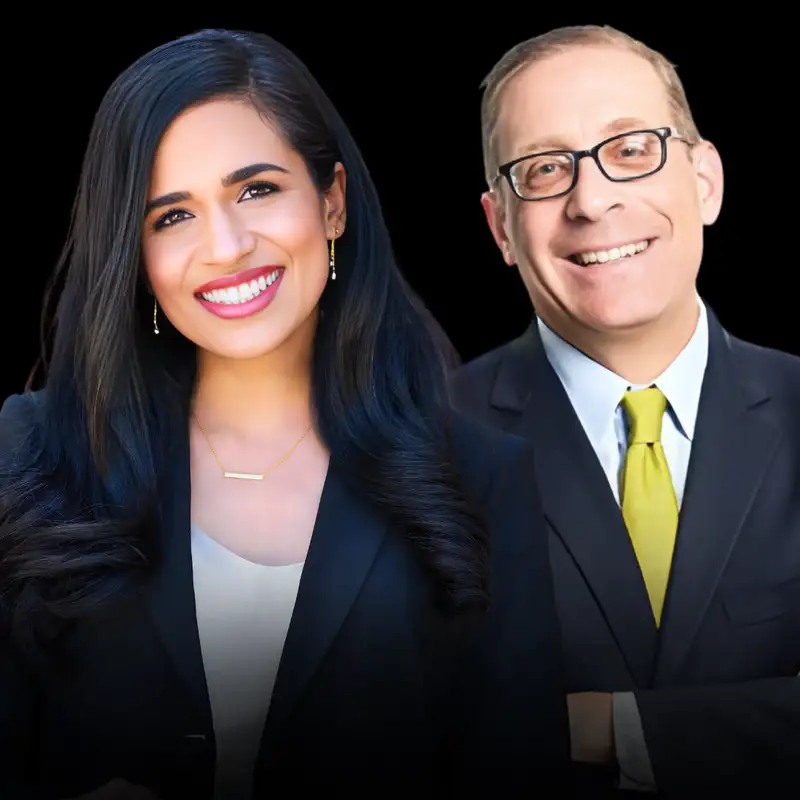
I'm Maya Shankar. I'm a cognitive scientist and author of the book The Other Side of Change and host of the podcast. A Slight Change of Plans.
00;00;09;17 - 00;00;18;29
Speaker 2
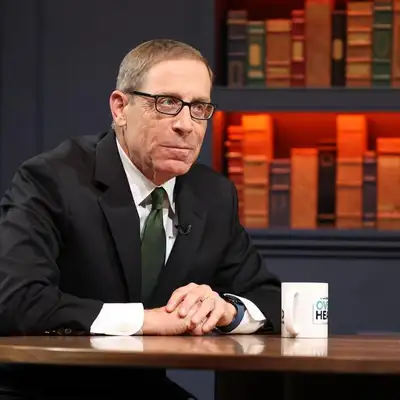
And I'm Evan Smith. I'm managing director for events at The Atlantic, and I'm the host of the PBS show overheard with Evan Smith, which airs on stations around the.
00;00;18;29 - 00;00;47;07
Speaker 1
I'm curious to know Evan. One of my one of the things that people are really struggling with right now is the rapid pace of change. It's it's hitting people from all directions in all domains, and there's a sense of overwhelm. And I've refocused my career on the topic of how human beings navigate these unexpected, sometimes and dropping from the sky moments in their in their personal lives.
00;00;47;15 - 00;01;09;05
Speaker 1
Now it feels much larger than that, right? It's just a it's globally feeling very discomforting. And so I'm so curious to hear your journalistic perspective on how you think people can anchor themselves in a more stable place, just psychologically, given everything that's going on.
00;01;09;07 - 00;01;27;11
Speaker 2
It's a terrible time. It's really easy to be overwhelmed. Yeah. The firehose of news. This is how I think about the firehose of news is turned up to the highest setting at all times. Yup. Right. If this is the world that you're in, either because you're working in it, or because you're someone who just considers himself or herself a thoughtful and productive citizen.
00;01;27;11 - 00;01;51;05
Speaker 2
Like, I want to stay engaged. In touch with the things that are going on that might affect me. It really at no point in my life has there been so much information, but so much information coming at us. And it's hard to process and it's honestly, it's turning me away. Yeah. And if it's turning me away it's turning everybody away.
00;01;51;07 - 00;02;12;06
Speaker 2
Like I have I can't look at cable television news anymore. Yeah. Used to be a staple of my diet. We were talking earlier. Yeah. Watch of the interview this morning by George Packer at the New Orleans Book Festival. And he talked about the joy of deleting the Twitter app. About how his mental health has been so much better as a result of that.
00;02;12;06 - 00;02;33;02
Speaker 2
And I kind of what I'm so envious of. To be able to just unplug. Yeah. I think for the average person it's probably a little bit of a different conversation. Like civilians process this stuff differently than people who work in this stuff. But I would acknowledge, we're in a moment. Yeah. We're in a moment. And it's very hard to process.
00;02;33;03 - 00;02;55;21
Speaker 2
I mean, you've obviously worked in behavioral science for a number of years. Didn't work in it for a number of years. And I think about the impact on the mental health of people. The conversation that has pivoted to especially for young people. We should take their phones away from. You know, because it has significant impacts on their mental health.
00;02;55;23 - 00;03;00;20
Speaker 2
I see adults who spend all day long doomscrolling and I wonder if their mental health is affected. Yeah.
00;03;00;23 - 00;03;24;11
Speaker 1
No, absolutely. And it's so interesting. One of the people that I interviewed for my podcast, a slight change of plans, is the former US Surgeon General, Vivek Murthy. So the first time I had him on the show, we talked about the loneliness epidemic. And the second time, he came on, we talked about what we can do about the loneliness epidemic and how we can increase our feelings of connectedness.
00;03;24;14 - 00;03;47;15
Speaker 1
And the topic of news consumption came up because I asked him, what have you done to try to improve your well-being during this time? And he has massively reduced the number of times that he checks the news. And then I countered with something you already alluded to, which is. But Vivek, here's the problem. I want to feel like I am socially engaged, civically engaged.
00;03;47;16 - 00;04;05;23
Speaker 1
I want to feel like I'm doing my responsibility. Is it okay for me to just bury my head in the sand when all this stuff's going on? Because, you know, on the one hand, you want to have some, some degree of education about world events, right? Just to feel like you are participating in society. And what he was saying was.
00;04;05;23 - 00;04;26;16
Speaker 1
Yeah, but when you actually look at the way that people are consuming the news, they're often not reading long form articles and developing any kind of nuanced understanding of an issue. They're reading headlines or often reading similar headlines to one another on multiple news apps. They're switching between apps super quickly. That's how information is being digested right now.
00;04;26;18 - 00;04;34;26
Speaker 1
And that's not actually the kind of that's not the way that one would need to read the news in order to be more educated, to feel more edified.
00;04;34;29 - 00;04;54;09
Speaker 2
Swipe culture is not connectedness. Yeah. Is you think you're becoming more connected by spending time on these? Absolutely. In fact, it's becoming more disassociated from reality. The algorithms know exactly what they're doing to you, that they're intentional about it. Yep. And I think it makes you less connected rather than more connected to the people who matter to you, to your family, to your friends and neighbors, to your community.
00;04;54;16 - 00;05;13;18
Speaker 2
Yeah. I don't know that we fully appreciate the negative impact that that's had on all of us yet, but we will one day. Yeah. You know, and I think the other part of this, which I think is critical, is, to your point, I feel like I should stay connected. I mean, we're in the middle of a momentous election year, like, every election year these days.
00;05;13;18 - 00;05;19;22
Speaker 2
Seems momentous, right? Every time election comes up. People tell you this is the most important election of your life.
00;05;19;23 - 00;05;20;21
Speaker 1
Yeah.
00;05;20;24 - 00;05;38;03
Speaker 2
Last time. Yes. But I really mean it this time. And I totally, really mean it. This is the most momentous election of our lifetime. On the one hand, on the other, on the one hand. If you stay connected to things, then you're engaged in a conversation about candidates and issues, and you're motivated to go to the ballot box and participate in all that.
00;05;38;05 - 00;06;00;13
Speaker 2
On the other hand, it's so overwhelming that some people have been turned away from this, and I think for mental health reasons that people feel like they just can't. Yes. That's healthy. But then who ends up deciding the outcomes of these elections? Who which which affect all of us? Incredibly, it's only the most motivated people as the activists.
00;06;00;13 - 00;06;15;25
Speaker 2
It's the as we would say in Texas. It's the burnt ends of the brisket. Right. It's those people who end up deciding for the rest of us, what the world would be like for the next 2 or 4 years. So on the one hand, I encourage people to turn away if it's too much. But on the other hand, we need you.
00;06;15;27 - 00;06;24;14
Speaker 2
We need you to participate in this democracy of ours, turning away. I'm concerned about the calamity of nonparticipation.
00;06;24;16 - 00;06;56;13
Speaker 1
Yeah. There's a counterintuitive finding in psychology that really stuck with me when I first learned about it, which is it feels good in terms of checking a box to engage with the news or to engage with negative news, because we feel like we're doing our due diligence where we're being responsible. However, when that gets us really down, right when we find ourselves doomscrolling, when we find ourselves laying in bed feeling despair about the fate of the world, that is very counterproductive when it actually comes to action.
00;06;56;14 - 00;07;20;00
Speaker 1
So it just turns out like that the happiest people are going to be by and large, the most civically minded, the ones who are actually out there acting. And if you do things that eat away at your mental health in the moment, it can feel like a balm of sorts. Because even though it's unpleasant to consume this news, you again do feel like you're, you're just doing your duty.
00;07;20;02 - 00;07;40;13
Speaker 1
It's going to it's inevitably going to lead to less action. So I think people need to be very selective about what they take in and make sure that they are in that sweet spot of consuming enough to feel a sense of urgency, to understand the magnitude of the problems that we're up against. And also to learn what they could possibly do about it.
00;07;40;16 - 00;07;41;10
Speaker 2
Yeah.
00;07;41;13 - 00;07;45;24
Speaker 1
And then at that point, you try to convert it to action as quickly as possible.
00;07;45;26 - 00;08;04;20
Speaker 2
Well, so I say I want you to say more about this. You know, you're legal scientists. Do you understand why people do things that don't do things or how to get them to do things? Yeah. It has been a mystery to me for years why so many people in this country don't feel the obligation to have their voices heard at election time, or even not at election time.
00;08;04;22 - 00;08;28;26
Speaker 2
You know, to write a letter to their congressmen, knock on the door of their state legislator to attend a protest. Peaceful. Yeah. We are ceding control of our lives in our communities if we don't participate. You know, I live in a state, Texas, where we have among the worst voter turnout consistently. Every couple of years. It's 47, 48, 49th, 50th, sometimes 51st.
00;08;28;29 - 00;08;52;16
Speaker 2
I'm like, how is that even possible to be 51st out of 50? I went into journalism not to do math, but like count. Turns out it's worse than all of the 49 states and Washington, D.C.. Right. For purposes of this. And I can't understand that. You know, we live in the United States of, of, voting against your self-interest or of not voting in your own.
00;08;52;18 - 00;09;00;02
Speaker 2
And so I want to understand for you, the expert, how do we get people's behavior on this stuff to change how you break through the complacency that.
00;09;00;05 - 00;09;28;08
Speaker 1
Yeah, I mean, look, it no one's figured this out fully. If they had, then we wouldn't be seeing the extremely low turnout rates that we see. Yeah, we would have to talk about it. However, there are some insights from psychology that are useful and from the general field of cognitive science. The first is around identity priming. So people by and large want to act in ways that align with their self identities or their aspirational self identities.
00;09;28;10 - 00;09;50;22
Speaker 1
And there was a really interesting study that was run in collaboration, I believe, at the Red cross, where in a letter to people who previously donated, they simply reminded them that they were previous donors and what they were doing was simply priming people for their self identities as people who are generous and charitable and care about this.
00;09;50;24 - 00;09;51;22
Speaker 2
They just reminded.
00;09;51;29 - 00;10;10;02
Speaker 1
Well, the letter was extensive, but the treatment condition involved an explicit nod to the fact that this person had previously donated. And what they found is that when you prime them for their identities as historical donors, that increased not only repeat donations, but magnitude of donations.
00;10;10;06 - 00;10;11;27
Speaker 2
They might have even given more.
00;10;11;29 - 00;10;25;29
Speaker 1
And that's interesting because they've run this in the context of of of voting. And if you say dear voter versus dear person, that can make a big difference. We also know about the power of social norms. So there was,
00;10;25;29 - 00;10;45;06
Speaker 1
When I worked in the Obama White House, I built a social and behavioral sciences team. And it was based on the idea that even small tweaks in the way a program or policies design can have outsize impact on behavior. And we modeled ourselves in part off of the behavioral science team that the UK government had stood up.
00;10;45;08 - 00;11;11;01
Speaker 1
And one of their findings was that, and this also is in the space of, you know, energy consumption by homeowners, etc., is that reminding people that they are part of a community with whom they identify as a really valuable, sorry, reminding people that they are part of the community and that they feel a sense of belonging with that community is a very helpful way to nudge people.
00;11;11;03 - 00;11;37;17
Speaker 1
So, yes, so so they were trying to get people to, who were late on paying their taxes to pay their taxes on time. And they tried a suite of different experimental conditions. Let's threaten them with a sign. Let's, you know, use this, you know, very, you know, aggressive language. What worked best, actually, was simply reminding people that, the large majority of people in their community had paid their taxes on time.
00;11;37;19 - 00;11;52;02
Speaker 1
You know, and the more specialized you get, the more tailored you get, the more effective the impact. So if you, if you know that nine out of ten teachers had paid their tax on time, that's going to be even more effective than simply saying nine of the ten people in your community.
00;11;52;03 - 00;11;59;16
Speaker 2
What I think is interesting about this is that you had a behavioral science team at the white House, not for the purpose of changing the political landscape.
00;11;59;16 - 00;12;29;01
Speaker 1
Correct. We took that as fixed a policy. It's about the implementation, yes, of policy and programs and it's actually it's such an important perspective to have even because oftentimes program and policymakers are so focused on making a good policy or program, they forget about that final mile problem. Right? So a good example of this is the U.S. government offers a free lunch program to low income students.
00;12;29;03 - 00;12;48;05
Speaker 1
It's called the National School Lunch Program. And despite the fact that the program is offered to millions of students, millions of kids were still going hungry every single day. And this was before my time at the white House. But the U.S. Department of Agriculture did a behavioral audit of the program to try to figure out, hey, what's going on here?
00;12;48;07 - 00;13;11;00
Speaker 1
These are highly nutritious meals. It's a very well-designed program. There's no issue with program integrity. Why aren't why aren't kids getting fed? And they found out that there were at least two behavioral barriers to entry. Number one, there was a big stigma associated with signing up kids for the program. So when I later worked at the white House, I remember speaking to a principal in Florida who said, look, parents work really hard.
00;13;11;02 - 00;13;36;03
Speaker 1
To make money for their families, and they don't like the idea that their kids are relying on the government to eat every day a defeat. And then the second is that there was just the administrative burden, the paperwork burden. So for people like you and me who have the luxury of time and resources, it's not a big deal to fill out a 14 page application form and to find an hour in the middle of the day to go to the post office and to mail it off.
00;13;36;04 - 00;13;44;04
Speaker 1
Well, imagine a single mom who's working three shifts to make ends meet. She's going to struggle to get that hour off at lunch, you know.
00;13;44;07 - 00;13;46;27
Speaker 2
Streamline the paperwork. I think the first one is the bigger.
00;13;46;29 - 00;14;10;24
Speaker 1
Well, let me tell you what the let me tell you what they did, which actually solve both problems. They yeah, they leverage, a powerful insight from behavioral economics called the power of the default option. So they change the program from an opt in program to an opt out program. So now parents only had to take an affirmative step if they wanted to actively un enroll their kids in the school lunch program.
00;14;11;00 - 00;14;31;21
Speaker 1
So in one fell swoop, one, there's no stigma because now almost every kid's getting free lunch at school. And number two, there's no paperwork. And there's also not the risk of, oh, if I fill out this part of the form wrong, I'll be accused of fraud. You know, there's lots of, there's a lot of underappreciated friction points in the application processes of this kind.
00;14;31;23 - 00;14;56;23
Speaker 1
And as a result of that tweak in the way the program was designed, 12.5 million more kids ate lunch every day at school. And so, by the way, this was the story. I remember hearing Cass Sunstein, who used to be the head of the Office of Information and Regulatory Affairs, was part of this initiative, and I had heard about that, when I was, you know, in the, in the ivory tower, doing my postdoc and decision making.
00;14;56;29 - 00;15;15;04
Speaker 1
And it was that story that led me to leave academia and to think, oh, my gosh, that's exactly the kind of work that needs to be done. We need to translate insights from our field about that, capture our best understanding of human behavior, and make sure they're making their way into the design of public programs.
00;15;15;06 - 00;15;24;05
Speaker 2
That not to get too into the politics at the moment, but yeah, somehow threatening and hectoring people to get what you want is not the best strategy.
00;15;24;07 - 00;15;52;06
Speaker 1
Correct? It really is. Absolutely. I think, I've been heartened to learn, actually, what motivates people. So it's like the communities that you belong to. We also know from research that people have a very strong pro-social bend. So people are happier when they give a gift to someone else than when they buy a gift for themselves. Yeah, that's a very hopeful, reassuring finding in a world that is very easy to just feel cynical about.
00;15;52;07 - 00;16;07;00
Speaker 2
I have no doubt. You know, there's a lot of discussion always about why is the world so divided, why are we so polarized? Why can't we get along with other people? Why have we stopped listening to people we don't know and don't agree with? You know, one of the easiest responses, but I don't really think it gets it.
00;16;07;00 - 00;16;28;18
Speaker 2
It is. Well, that's actually ridiculous. You know, during the Civil War, we were much more divided than we are now. In the past you're just forgetting, but I want to come back to this idea that people are inherently good. I think we've gotten to a point in this country where we assume the worst about people, about people we don't know, about people who look different from us.
00;16;28;21 - 00;16;52;10
Speaker 2
We assume the worst. I think people are good. I think leaders are not good. We're not good always. And I think that in a lot of ways we have to scrape a lot and rebuild in terms of how we think about leadership and governance in this case. I am so fed up with government that's there for its own purposes that doesn't actually want to do things.
00;16;52;10 - 00;17;09;22
Speaker 2
In fact, people in government now brag about how little they do. That's a feature about it. And you know the thing is most people are perfectly happy to do things on their own up to the point where they can't and they need the help of some public entity to, you know, get them across the finish line, finish line.
00;17;09;24 - 00;17;30;23
Speaker 2
And I think government is broken and I think I don't think where the problem is, you know, I don't think the average person is there. And so I absolutely fine with the idea that, you know, people are inherently good. And I and I actually think that it gets back to the thing we were talking about about voting for civic participation.
00;17;30;26 - 00;17;59;07
Speaker 2
I think the messaging has been. I think we sort of have threatened people in the last election and said, oh, your democracy's at risk and you need to you're responsible for this and you need to to be better motivated to, to solve the problem. And I don't I think people tuned this out. I think if you appeal to people's better angels as opposed to threatening and hectoring them, trying to scare them, you know, a much better opportunity to get them to do the thing that they know.
00;17;59;10 - 00;18;06;12
Speaker 1
Yeah, we know people respond far better to intrinsic motivators and extrinsic motivators in a lot of settings.
00;18;06;14 - 00;18;14;08
Speaker 2
You have I will say this is not to say that I think, a negative message is it is not effective at times.
00;18;14;15 - 00;18;15;18
Speaker 1
Absolutely.
00;18;15;20 - 00;18;36;04
Speaker 2
Yeah. I know from journalism who said to me some time ago, anger is a greater motivator than joy at election. People who are unhappy about the state of things and the way it affects them might actually be motivated finally to turn out to vote. And in high turnout elections often the motivation for that high turnout is in fact unhappiness.
00;18;36;04 - 00;18;53;21
Speaker 2
I think about the first Trump midterm in Texas, where we had the highest turnout during the midterm election in many years before or since. And it was, you know, people of color, women, young people all upset about the first two years that they turned out to vote, even in a place like Texas. In record numbers. Here we are in another Trump midterm.
00;18;53;21 - 00;19;10;18
Speaker 2
And I'm actually seeing already in Texas turnout that is abnormally high for a midterm. And wondering if we're at the same place. But having said that I'm with you more positive motivations. I feel me, people's better angels. That I think is a much better.
00;19;10;20 - 00;19;42;27
Speaker 1
I think, look, you know, way more about politics than I do. I can say, as a cognitive scientist that being in this field for decades now is one of the greatest empathy builders when it comes to the way that I see other people, even people who have vastly different views than the ones that I carry. And that's because when you pull the curtain back and you see why someone believes what they believe, it's very hard to fully to think that they're fully irredeemable.
00;19;43;03 - 00;20;00;01
Speaker 1
You know, like you see redemption there, or you think, okay, at least I understand, you know, oh, wow, this was this was a view inherited because generations before them had this viewpoint. You know, this was a family thing. This was, oh. This is, you know, this kid didn't have parents growing up. And this is the community. They found.
00;20;00;02 - 00;20;21;26
Speaker 1
You know, there's just when you learn about people's stories and you just understand the mind and how the mind makes decisions, how we develop our attitudes and beliefs about the world, you realize, okay, it's not a it's not often a conscious, deliberate, thoughtful system. You know, we have all sorts of biases. We have all sorts of heuristics. We jump to all sorts of conclusions, however unfounded they may be.
00;20;21;28 - 00;20;42;10
Speaker 1
And so part of my goal is to, you know, help reveal what those biases are so that we can override them. You know, I do want people to, have a stronger relationship with evidence and facts and data, but we just know from research that most people aren't making up their minds. They're not deciding how they feel about something based on the evidence.
00;20;42;12 - 00;21;06;28
Speaker 1
It's about community membership. It's about tribal membership. It's about taking signals from leaders. Or they assume, okay, if I'm in this political party, then I believe everything that political party has to say, you know, think, you know, things like that. And so, it's but I also, again, there's there's a humility there because it's very hard for us to, as individuals to overcome our own mental biases.
00;21;06;28 - 00;21;11;24
Speaker 1
We're using our brains to overcome our brains biases. Right. So that can be non-trivial.
00;21;11;25 - 00;21;18;00
Speaker 2
I have to say that for me the answer is almost always proximity. It's much easier to hate somebody you don't know.
00;21;18;02 - 00;21;19;07
Speaker 1
Absolutely.
00;21;19;09 - 00;21;36;28
Speaker 2
Or don't have to to meet up for a coffee or for lunch. I think one of the evils of social media is one that's created a permission structure to hate somebody. And. Yeah. Right. I appreciate the opportunity to get to know people, even if I agree with anything that they believe.
00;21;37;01 - 00;21;39;06
Speaker 1
And you learn so much to so much.
00;21;39;06 - 00;22;05;16
Speaker 2
My my views on some things have changed. Absolutely by exposure to people's ideas that were not my ideas. But it's more the human interaction with people who I don't know or don't necessarily agree with that humanizes them and makes them somebody who I honestly, it's expansive for me. Yeah. My life is made better. And and I think that's what's missing to a large degree.
00;22;05;16 - 00;22;25;04
Speaker 2
So I teach at the LA. I'll tell you the story. I teach at the LBJ School of Public Affairs, the Graduate School in Public Affairs at the University of Texas, and I have master's students every semester. 15 to 20 master's students. Some of them are right out of college. Some of them have been working for a while and come back different backgrounds, but they're there because they want to make the world a better place.
00;22;25;04 - 00;22;44;08
Speaker 2
They see a role for themselves in being forces for good going forward and all that. I will also say that the complaints that you hear at some levels about the lack of viewpoint diversity in higher ed are not without merit. There are a lot of people in that room who seek the same thing and who believe the same thing.
00;22;44;08 - 00;23;01;17
Speaker 2
And so I start out this semester by saying I am going to consciously, intentionally bring people as guests into this class who you don't agree with people on the force. You sit there and listen to people who you don't agree with because you're in a bubble. And I want you to know people who have different views from you.
00;23;01;17 - 00;23;15;21
Speaker 2
I want you to see that they're not warlocks and goblins, but they're just people who are different from you. Yeah. And I want you to, to kind of like, take in the experience of listening to that. Even if you walk out and they don't agree with anything they said, I'm going to be totally same as I was before.
00;23;15;23 - 00;23;38;21
Speaker 2
That experience of being exposed to points of view different from yours is the antidote to the poison. Yeah, yeah, yeah. And they're just shocked by this idea that they're going to be exposed to people that don't agree with. And I bring people in and they just sit there and they're just like, man, I can't believe this. Yeah. But by the end of the semester, every time, I must tell you, I think they are better situated to be in this world.
00;23;38;23 - 00;23;56;28
Speaker 2
I wish that there were more opportunities for people to be in those situations. And that that's the conundrum is that we've made it too easy. Yeah. For people to check out, to not be in front of people in the room with people. Who they don't know, don't like, don't look like who are the other. Yeah.
00;23;57;01 - 00;24;01;16
Speaker 2
And social media is at the very top of the list of the worst facilitators. Yeah.
00;24;01;18 - 00;24;19;09
Speaker 1
There's also another dimension here. I alluded to this just for a bit earlier, which is the importance of the messenger. We focus so much on the content, the information we want to convey to people, but we don't always think very thoughtfully about who conveys that message. So I have a concrete example from the end of my time in the Obama White House.
00;24;19;09 - 00;24;46;16
Speaker 1
We were on the ground in Flint, Michigan, during the lead in water crisis, and we were writing water safety fact sheets to get good information out into the world and to disabuse people of misinformation. Now, who's going to deliver this newsletter? Right. This fact sheet. Well, sorry. So so who's going to deliver this fact sheet? So I think the default assumption was well, we should have the Environmental Protection Agency do it.
00;24;46;17 - 00;25;09;22
Speaker 1
You know, they're the leading authorities on all things environmental. Let's have them put the stamp on it. And like that's that's going to be the messenger. But then you have to zoom out and think about the context in which Flint residents are operating at that moment. They've just been systematically lied to by their local government for decades. They they've experienced disenfranchisement, systemic racism.
00;25;09;24 - 00;25;33;25
Speaker 1
Trust is very low when it comes to this population and their government. You could very well expect that that lack of trust might spill over to the federal government. Right. Just large institutions. Why do I if I were a Flint resident, I wouldn't trust the government of any kind at this point. Right? They their generations were poisoned as a result of the government's actions.
00;25;33;28 - 00;26;03;03
Speaker 1
And so I thought the, the local EPA did something very brilliant. What the what what they in the community did was organize a local canvasing effort in which members of the local churches of the local Red cross units of the YMCA, people that you would see every Sunday at the supermarket went door to door, knocked on the door, said, hey, Kevin, you're my buddy.
00;26;03;06 - 00;26;19;16
Speaker 1
This has been vetted by the EPA. So just, you know, the information in here is valid. But I, Maya, as your friend, want you to know, I vouch for it, and I think it's real. And I do think that often we think, oh, the the person who has the most power should be the person delivering the message. Right?
00;26;19;24 - 00;26;32;24
Speaker 1
But you need to ask yourself in this doesn't just apply to politics in any organization, any corporation. Different messages should be delivered by different people. And they will have different degrees of impact accordingly.
00;26;32;25 - 00;26;54;21
Speaker 2
Yeah. This is the problem with journalism right now that I can't get my mind around. But I know it's true. And that is that we have become, untrustworthy to the vast majority of Americans. The Gallup organization does a poll every year at the end of the year. Trust in the media and the percentage of Americans in the last poll in the last year, who had a great deal of trust in the media, was down to 28.
00;26;54;24 - 00;27;11;28
Speaker 2
Oh my gosh. It's a historic low. Yeah. And if you break it down by political party, only 8% of Republicans have a great deal of trust in media. And of course, I'm going, why is this? And before I can get to how do we fix it and when why is. Get back to your idea about trusted messengers.
00;27;11;28 - 00;27;35;13
Speaker 2
We may have all the good information in the world, all the factual information in the world, all relevant information in the world to produce for people every single day. But if they don't trust us institutionally, that information is going to bunk. Yeah. No one is going to actually take it in. I think that there's been a deliberate, on the one hand, a deliberate campaign to undermine faith and confidence in institutions generally, of which the media is only he courts or another institution.
00;27;35;13 - 00;27;58;03
Speaker 2
I think science is an institution, and he can go down the list of things that we took for granted or trusted institutions, our communities, but untrustworthy. And it was an intentional effort on the part of the people of power to undermine trust in those institutions. The plan has worked. Yeah. And I think in the case of the media specifically, you had a bunch of people in political office who said they're going to write negative stuff about us at some point.
00;27;58;06 - 00;28;20;16
Speaker 2
We want to do that by undermining faith and confidence in the media, so that when they write that negative thing, we can say, we told you don't believe this. Sure. That plan has worked. I think part of it is that the media at least has done a terrible job of making themselves trustworthy by being fully transparent about their process.
00;28;20;18 - 00;28;46;04
Speaker 2
We are not humble. We're arrogant when we make mistakes. And people pointed out we get defensive about it. We make a mistake. On page 81 we correct that mistake on page 20. We don't do a very good job of walking in people's shoes. Like I think part of this trust problem, which is a critical failure. Make no mistake, whether it's government or the media, the government's ability to communicate factual information in a community like Flint.
00;28;46;11 - 00;29;07;20
Speaker 2
Yeah. Or the media's ability to communicate information that is relevant in a political campaign or at any time. We did this to ourselves. The call is coming from inside. Like we did it. And I think that one of the problems that we all have, all institutions, is getting over the fact that we have some responsibility for this and figuring out how to make, how to make things better.
00;29;07;22 - 00;29;23;12
Speaker 2
Yeah. The media business at least is my trusted profession. You know, I love this profession, chosen profession, for so many years. I think it's done a terrible job of solving for this. Yeah. Help government to do a better job. But I'm not sure that I see any evidence so far that it can.
00;29;23;15 - 00;29;47;13
Speaker 1
You mentioned transparency. And one principle to come out of behavioral economics is a concept known as operational transparency. And what research shows is that when you pull the curtain back and you let people in on how the sausage is made, that can really boost trust, even when they don't love everything that they see behind the scenes, even when they witness inefficiencies, even when they're not sure how a decision was made.
00;29;47;15 - 00;30;12;13
Speaker 1
Just being overt about those decisions and choices can be a game changer. In one study, the city of Boston was struggling with a bunch of issues on the road. So potholes, broken, street signs broken, you know, stoplights, things like that. And residents naturally were really frustrated by this, and they were frustrated by the speed at which these repairs were being made.
00;30;12;16 - 00;30;31;07
Speaker 1
And in one of the experimental conditions, a virtual map was made in which the city simply recognized the location of all the issues and then had a little, you know, meter, if you will, that okay, here are the ones that have been completed. Here are the fixes that are still open. Here are the ones that, we're postponing, let's say.
00;30;31;08 - 00;30;38;08
Speaker 1
Right. I can't remember the exact, sorry. Let me let me just think for one second.
00;30;38;08 - 00;31;08;03
Speaker 1
So what they did in one of the experimental conditions is they created this virtual map that simply identified the location of each of these issues and what the status of that repair was. So it's been completed or, you know, it's coming up. And what's so interesting is that even though the speed with which the repairs were going to be made did not increase, merely making this map and being transparent about the issues and showing this degree of accountability increase trust in government and on follow up surveys.
00;31;08;03 - 00;31;09;04
Speaker 1
Civic mindedness.
00;31;09;07 - 00;31;10;05
Speaker 2
Yeah.
00;31;10;08 - 00;31;30;11
Speaker 1
And I think that's really important because and I think this is true again, in, in companies, organizations of any kind, certainly in government, we, you know, there's just an instinct like, oh, just let's just not share, you know, why share everything. It's so messy. You know, even if it comes from good intentions, it's like, oh, let's protect our people from all the swirl.
00;31;30;13 - 00;31;45;29
Speaker 2
When one of this has been sort of like a fourth grader in math class, you have to show your work. So I'm thinking about the great example to me is David Farenthold, who was a wonderful reporter, won a Pulitzer at the Washington Post. And that was The New York Times when he started reporting on the Trump Foundation in 2016.
00;31;46;01 - 00;32;04;06
Speaker 2
He wanted to find out who had received money from the Trump Foundation. Trump Foundation claimed to have given away all this money, but he couldn't find any information. I remember the story exactly, about the recipients of this. Yeah, a list of every organization that might have received money from the Trump Foundation on a big chief tablet, like a big yellow legal pad.
00;32;04;08 - 00;32;24;01
Speaker 2
And he was tweeting out pictures of the list and saying, if anybody knows whether any of these organizations have received money, I'd love it if you get in touch. That became essentially the hallmark of the reporting project that he would send out on social media. These pictures of his notes and his, you know, he was kind of chronicling his efforts to report the story while he was reporting.
00;32;24;03 - 00;32;44;12
Speaker 2
The level of transparency, I think, created a sense of trust in the project. It demystified the way that reporting is done. Yes. Now you have news organizations routinely at the top of the story saying this story was based on 30 interviews with people in the white House who could not be named because they were not authorized to speak.
00;32;44;19 - 00;32;59;09
Speaker 2
Like I see that kind of level of transparency is a way back to regaining trust. As you said earlier, even if people don't agree with the story, if they don't like. Yeah. Giving them a sense of this is how the sausage is.
00;32;59;12 - 00;33;00;19
Speaker 1
Yeah, exactly.
00;33;00;22 - 00;33;02;02
Speaker 2
There is there is something.
00;33;02;05 - 00;33;24;29
Speaker 1
And and I think it can make people more tolerant of uncertainty. So one of the things that I tackled in my book, The Other Side of Change, is how a reason change can be so scary for our brains to process, is that an unexpected change is often filled with the profound amount of uncertainty in our brains are not wired to enjoy uncertainty.
00;33;25;01 - 00;33;45;29
Speaker 1
Yeah, and one of my favorite study shows that we are more stressed when we're told we have a 50% chance of receiving an electric shock. Then when we're told we have a 100% chance of receiving that shock. And, you know, it sounds kind of wild, Evan, but but like, I, I really resonate with this finding I want as a person.
00;33;45;29 - 00;34;13;13
Speaker 1
I like being in control. I have an illusion of control. You know, I vastly overestimate the degree to which I'm going to dictate outcomes in my life. Most people have this illusion of control, and I like knowing how the story ends. And I think, I think one reason this time is particularly tough is that it's just hard for our brains to live in a constant state of turmoil and anxiety and not having the cognitive closure that we all crave.
00;34;13;16 - 00;34;35;25
Speaker 1
What I did for the book is actually interview people about their extraordinary. And I mean that in the definitional sense of the word experiences of personal change, whether it was a brain stem stroke that left someone locked in or a prison sentence or, learning a fascinating secret that was unexpected about their family history, that upended their sense of self.
00;34;35;27 - 00;34;58;16
Speaker 1
And I try to distill wisdom or insights from their experiences, you know, and then pair that with with what I understand about the science of the mind. I'm curious to know from your experience how have you learned to become a little more comfortable with uncertainty, with this constant current of uncertainty?
00;34;58;19 - 00;35;22;26
Speaker 2
Yeah, I, I have to be honest with you, I, I've been an advocate for change for a long time. Yeah. The business I'm in, I'm constantly talking about we need to reinvent. We need to innovate. We need to iterate. You know, at a certain point, change is a tough thing. Yeah. For anybody. Yeah. For that, being a change agent ultimately is, is is pretty destabilizing.
00;35;22;26 - 00;35;38;21
Speaker 2
If it's if it's only about change, if it's all about uncertainty, it could be it could be too much. It's really about finding finding the balance. Yeah. I'm a little bit of a stick in the mud. Honestly, after years and years of being a change agent, I kind of feel like I have for somebody else to do that.
00;35;38;24 - 00;35;39;21
Speaker 1
Interesting.
00;35;39;23 - 00;35;54;07
Speaker 2
And it kind of comes where I sort of ended where we began. You know, the, the chaos of the world right now, the, the, that firehose of news, the overwhelming feeling that we all get in trying to consume this stuff. We just want everything to chill.
00;35;54;09 - 00;35;55;08
Speaker 1
Yeah I know.
00;35;55;11 - 00;36;03;16
Speaker 2
We need less of this. Yeah. Less change. I don't know that it's something that's going to happen anymore. Yeah.
00;36;03;18 - 00;36;21;11
Speaker 1
I would love to end by having each of us share one thing we do on a daily basis, to stay positive and to help renew our faith in humanity first. Okay, well, I should have thought about this a little more before I asked you the question. Now,
00;36;21;11 - 00;36;29;26
Speaker 1
one concept that I learned about when I was researching for my book is called Moral Elevation.
00;36;29;28 - 00;36;44;21
Speaker 1
Moral elevation is that warm, fuzzy feeling we get in our chest when we witness someone else's extraordinary behavior. So that could be their kindness or courage or self-sacrifice or resilience or fortitude.
00;36;44;21 - 00;37;09;18
Speaker 1
And what's so interesting about moral elevation is that it doesn't simply feel good, it actually changes our brains. It rewires the way that we think about ourselves in the world around us. And that's because when we witness someone else violate our assumptions of what humans are capable of in the best way possible, it actually cracks open our own imagination about what we think we are capable of.
00;37;09;21 - 00;37;35;26
Speaker 1
So there's an element of empowerment in it. And I remember I distinctly remember having a moment of elevation after the horrific shooting at Amy Church in South Carolina, the daughter of one of the victims publicly extended forgiveness to the racist killer, Nadine Collier. And I was so stunned by the depth of forgiveness she was able to find within herself.
00;37;35;26 - 00;38;01;07
Speaker 1
It was it was truly mind blowing and extraordinary, and I almost felt like it took my breath away. And the power of moral elevation is that it transcends domains. So it's not like I was looking to forgive anyone in particular in my life at that moment. But what that experience did for me was make me wonder, what can I be more empathetic?
00;38;01;09 - 00;38;17;11
Speaker 1
Can I be more caring? Can I be more loving? Can I be more disciplined? You can think about any domain of human behavior that you would want to be like, and when you witness someone else just go to the outer bounds of what you thought a human was capable of. You think, oh, I'm, I'm probably capable of so much more good.
00;38;17;13 - 00;38;20;24
Speaker 2
Yeah. I love your answer. And unfortunately, mine's going to be much more mundane.
00;38;20;26 - 00;38;23;13
Speaker 1
That's okay. It's that any in any everyday thing.
00;38;23;16 - 00;38;51;26
Speaker 2
I think that it requires the world that we're in right now and the need to to get past the bad stuff that we're all feeling, experiencing right now, requires you to physically remove yourself from your comfort zone, around you who think the same as you, or at least like you. Yep. And put yourself in the company of people who are from a totally different set of life experiences.
00;38;51;29 - 00;39;18;02
Speaker 2
I play tennis. That's the way that I get away from all the stuff that I do. I work some ungodly number of hours every single day, and I mean every single day. I just. And I'm around people I play tennis who do not care at all a whit about the stuff that I care about. It's humbling, but it's also empowering to be around people who don't want anything from you, who don't think, sure, think about it.
00;39;18;02 - 00;39;37;00
Speaker 2
It's given me a totally different perspective on what was a very insular, professional life and world that I've been in for years and years. It's opened my eyes to the normal concerns of normal people. Yeah, those of us in the media are not normal.
00;39;37;02 - 00;39;37;13
Speaker 1
Sure.
00;39;37;13 - 00;39;52;25
Speaker 2
And I've really enjoyed just getting to know people as people. I used to say that when I was running these organizations, I was in the business of raising money to support really important journalism, that I'd walk in a room and like the old Bugs Bunny cartoon, Bugs Bunny. You're too young to remember this.
00;39;53;01 - 00;39;56;09
Speaker 1
I remember Bugs Bunny. Not that young.
00;39;56;11 - 00;40;14;08
Speaker 2
Bugs Bunny crawling our hands and knees through the desert, starving to death and on the verge of dehydration, and looks in the distance and sees a fat guy in a skinny guy and imagines it was a hamburger and a hotdog. I felt like when I walked in a room for many years. Oh, I saw, I had lost the ability to have human relationships with people.
00;40;14;15 - 00;40;23;24
Speaker 2
I say focus on the thing. I was sure, sure. And I haven't seen hamburgers and hot dogs for several years because I've been out of that business and I've been around for people having normal conversations.
00;40;23;26 - 00;40;25;00
Speaker 1
Oh, I love that.
00;40;25;02 - 00;40;45;04
Speaker 2
Yeah, to me, the antidote really is human relationships get to know people who they are and that's who they are. Yeah, you don't have to talk about the news all the time. You don't have to talk about the white House all the time. You have to talk about politics all the time. Just like hold back, get away from.
00;40;45;07 - 00;40;52;25
Speaker 2
Yeah, that's been as simple as it seems. An enormous change and an enormous reset. And I feel like I'm so much better.
00;40;52;28 - 00;40;56;15
Speaker 1
Yeah, well, it's been a pleasure to have this conversation. I've been.
00;40;56;17 - 00;40;57;16
Speaker 2
Great. Thanks.
Creators and Guests